
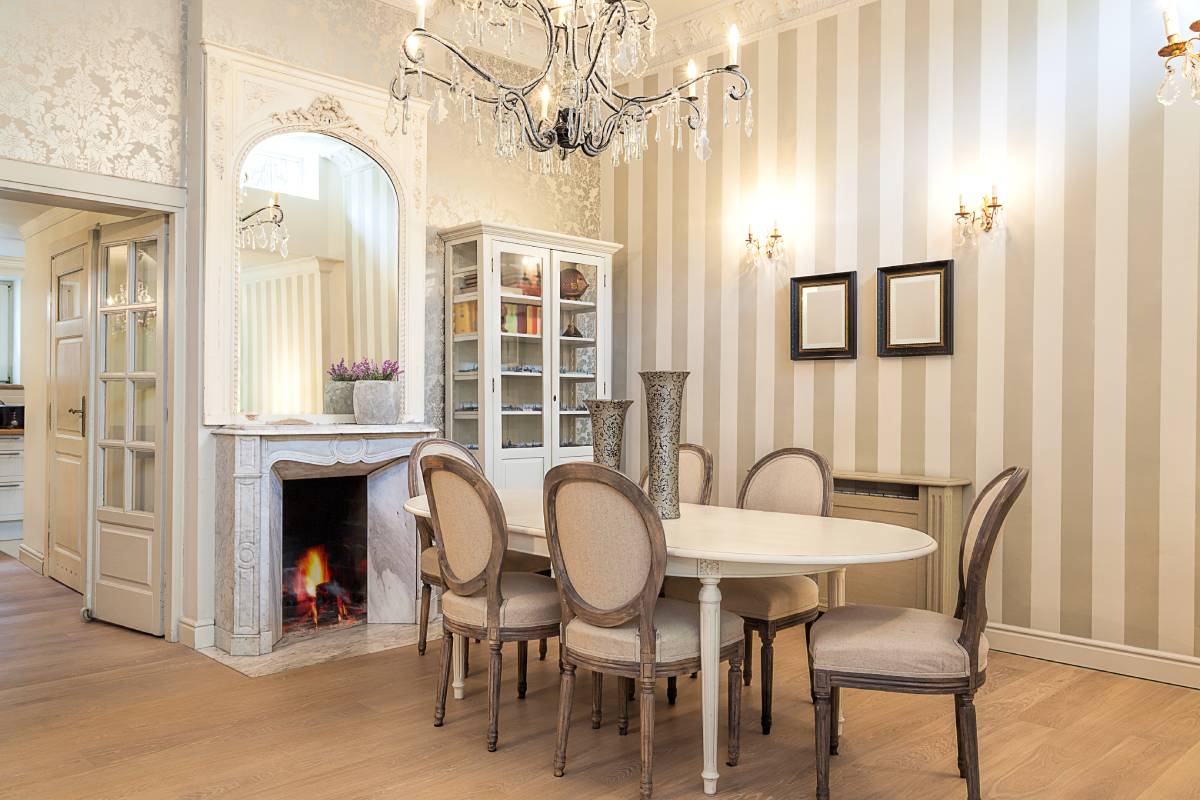
Have you ever walked into a room that felt grand and full of history, and then into another that felt like a quiet breath of fresh air? It can be confusing trying to put your finger on exactly why they feel so different.
We often get stuck thinking it’s just about “fancy chairs” versus “low tables,” but the reality goes much deeper. If you don’t understand the root of these styles, trying to decorate your own home can feel like mixing oil and water, cluttered, disjointed, and just “off.”
But don’t worry! Once you understand the simple philosophies behind the furniture, you can master the look of either (or blend them perfectly). In this guide, we’ll break down the core differences between European and Asian interior design so you can build a space that feels right for you.
TL;DR: What is the main difference?
European interior design focuses on individualism and ornamentation, often highlighting history, craftsmanship, and filling space to create comfort. In contrast, Asian interior design prioritizes harmony and negative space, aiming to blend the indoors with nature and remove distractions to promote mental clarity.
To understand the design, we have to look at the history books.
European Design is often about Individualism. Think of a castle or a Victorian home. The design says, “Look at this beautiful collection I own.” It celebrates personal taste, history, and intricate details. It’s about creating a space that stands out and offers maximum physical comfort.
Asian Design (specifically influenced by Taoism, Buddhism, and Confucianism) is about Harmony. It’s less about the things you own and more about how you fit into the universe. The goal isn’t to stand out, but to blend in.
Key Takeaway: European style is like a well-written biography of the owner. Asian style is like a quiet poem about nature.
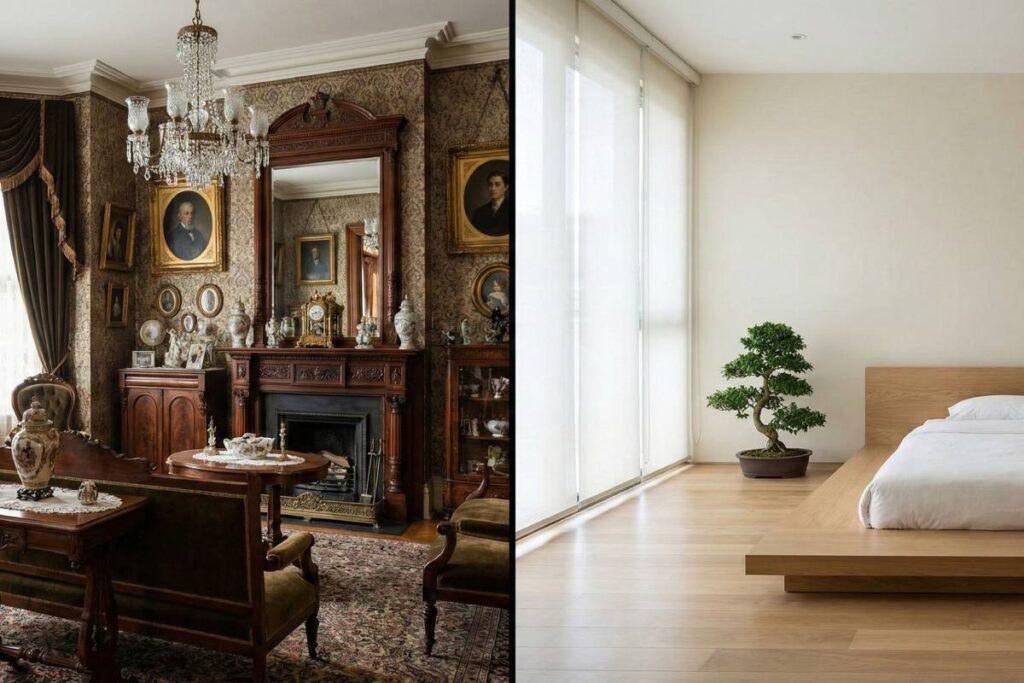
Imagine a blank piece of paper.
In Japan, this concept is called “Ma” (Negative Space). It’s the belief that emptiness gives the eyes (and the mind) a place to rest.
| Feature | European Style | Asian Style |
| Focal Point | The Fireplace, a large Painting, or a Chandelier. | A Window (view of nature) or a single Scroll/Ikebana. |
| Furniture | Often placed in the center or arranged for conversation groups. | Often lower to the ground, pushed to edges to maximize flow. |
| Symmetry | Highly Symmetrical (matching lamps, matching chairs). | Asymmetrical (balanced, but not mirrored). |
EL5 Analogy: Think of a European room like a fully decorated Christmas tree, every branch has something lovely. An Asian room is like a single, perfect bonsai tree; it’s beautiful because of the empty space between the branches.
The materials used in these designs were originally dictated by what was available outside the front door.
Europe has a history of stone buildings and heavy hardwoods (like Oak, Walnut, and Mahogany). The interiors reflect this “heaviness.” You’ll see:
Asia (particularly East Asia) relied on lighter, renewable resources. The goal is to bring the “outside in.” You’ll see:
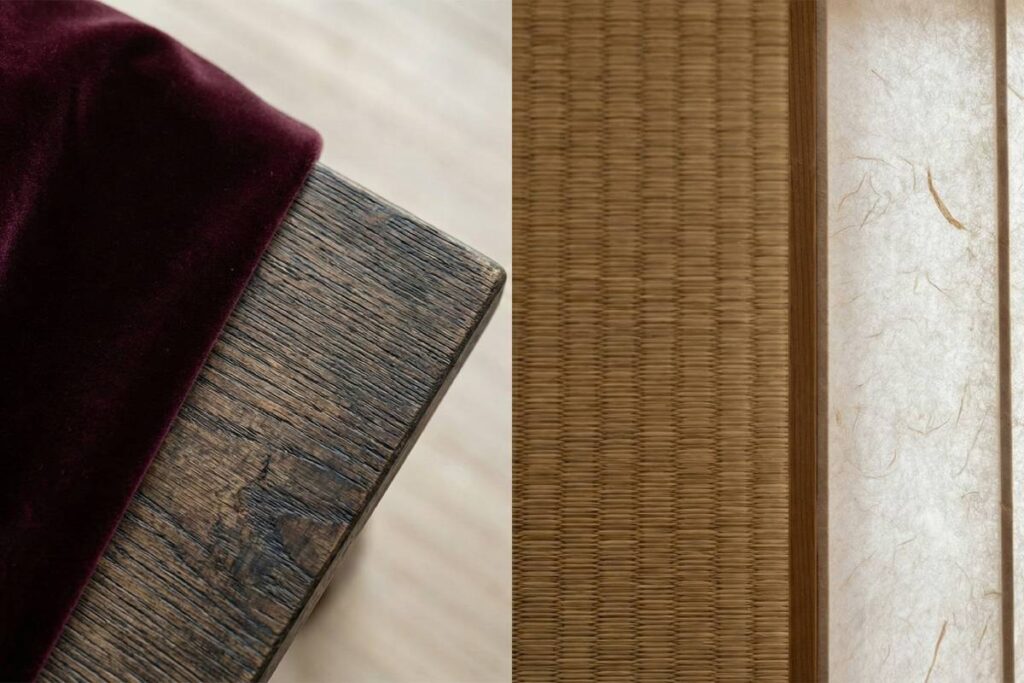
European design isn’t afraid of colour. From the royal blues of French courts to the deep reds of Victorian parlors, color is used to set a mood or show status.
Asian design usually sticks to an Earth Tone palette. The colours are meant to be soothing, not exciting. If there is colour, it is usually a specific accent (like red for luck in Chinese culture), but the base is almost always neutral.
Pro Tip from Alix Helps Interiors:
If you love both looks, don’t be afraid to mix them! This fusion is often called “Japandi.” The team at Alix Helps Interiors suggests starting with the Asian colour palette (neutrals) as your base, then adding European furniture shapes for comfort. It’s the easiest way to blend the two worlds without the room feeling cluttered.
So, is one style better than the other? Absolutely not!
It comes down to what you need your home to do for you. Do you want a cozy, history-filled sanctuary that wraps you in comfort (European)? Or do you crave a calm, airy retreat that clears your mind after a busy day (Asian)?
Understanding these differences is the first step. The magic happens when you stop copying pictures from magazines and start choosing elements that make you feel at home.
Applying these principles isn’t just for living rooms; many people are now using Asian-inspired minimalism to boost focus in their workspaces, though it helps to know the average office renovation cost before tearing down walls to create that open-plan flow.
